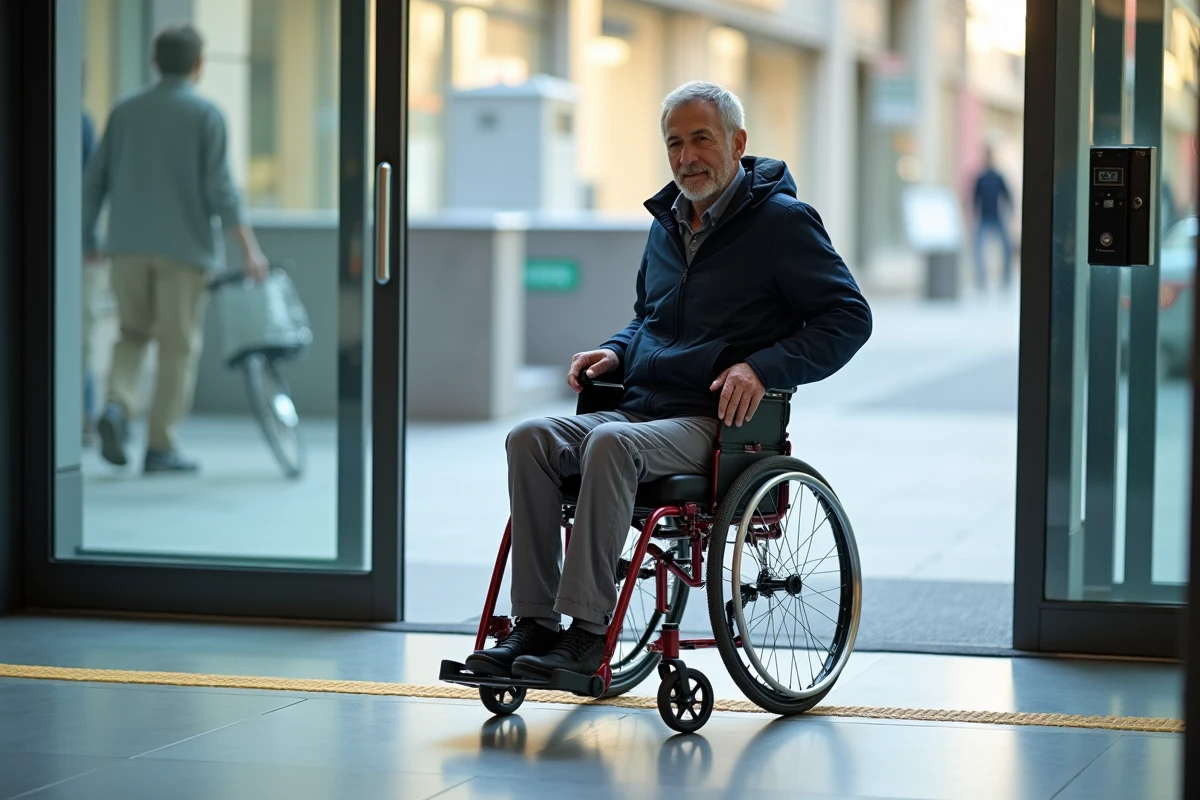
The acronym PMR refers to people with reduced mobility, a category that is much broader than just motor disabilities. Elderly individuals, parents with strollers, travelers laden with luggage, temporary injuries: all are affected by the physical obstacles of daily life. Understanding what PMR access entails means grasping a precise regulatory framework, but also measuring the gap between the texts and their application on the ground.
Labels and technical references: what the standard alone does not cover
French regulations impose accessibility obligations on establishments receiving the public since the law of February 11, 2005. The texts set thresholds (passage widths, ramp slopes, counter heights) that constitute a minimal baseline.
This baseline is not always sufficient to guarantee truly functional access. That is why sectoral labels complement regulatory standards. The Handiplage label, recognized since 2000, imposes four progressively demanding levels: pathways leading to the water, adapted sanitary facilities, bathing aids, and for higher levels, guiding devices for visually impaired individuals (sound beacons, tactile paving).
This complementary approach is found in technical references. The NF P98-351 standard and the international ISO 21542 standard govern the layout of reception areas with a precision that the 2005 law does not reach: height and depth of counters, call devices, tactile and visual signage. An ERP can be compliant with the law while still being difficult to access if these references are not taken into account.
To delve deeper into the definition of PMR access and the obligations that arise from it, it is necessary to distinguish what the law requires from what labels and technical standards recommend. The confusion between these two levels explains part of the delays observed.

PMR accessibility and territorial policies: the shift of 2024-2026
Accessibility is no longer solely a matter of the building. Since 2023-2024, several prefectures are locally implementing accessibility action plans with a 2026 horizon. For example, the Bas-Rhin plan structures its objectives around three axes: public buildings, roadways, and digital services, with annual monitoring and territorial assessments.
This change in scale is notable. A business may have a compliant ramp, but if the sidewalk leading to it has an untreated slope or if the nearby pedestrian crossing lacks a warning strip, the chain of movement remains broken. PMR access requires a continuity of pathways, not just a one-off arrangement.
Field feedback varies on this point. Some municipalities systematically integrate accessibility into their roadway plans, while others only address ERPs without touching the surrounding public space. The available data do not allow for a uniform national assessment of these territorial initiatives.
ERPs and housing: two distinct regulatory frameworks for PMR access
Confusion is common between the obligations that apply to ERPs and those concerning housing. The construction and housing code treats these two categories separately, with different requirements.
Obligations for establishments receiving the public
Since the 2005 law, every ERP must allow a disabled person to access the building, move around it, and receive the information provided. Establishments not compliant as of January 1, 2015, were required to submit a Scheduled Accessibility Agenda (Ad’AP) to plan their work over three, six, or nine years.
The Ministry of Ecological Transition has implemented an action plan focusing on controls and sanctions for inaccessible ERPs. Aggressive canvassing campaigns target ERP managers, with companies posing as administrative authorities to sell accessibility registers. Vigilance remains essential.
Obligations for new housing
Since January 1, 2008, new collective and individual housing must ensure PMR access. The obligations focus on three areas:
- External access to the building: reserved parking spaces, adapted ramps, obstacle-free pathways to the entrance
- Circulation in the interior common areas: sufficient turning spaces for a wheelchair, elevators of regulatory dimensions, readable signage
- The use of equipment inside the housing: accessible ground-level bathrooms, door widths compatible with a wheelchair, outlets and switches at suitable heights
In contrast, older housing is not subject to the same constraints. Accessibility modifications are only mandatory in the case of significant renovations or a change in the building’s purpose.
PMR access beyond buildings: transport, leisure, and digital
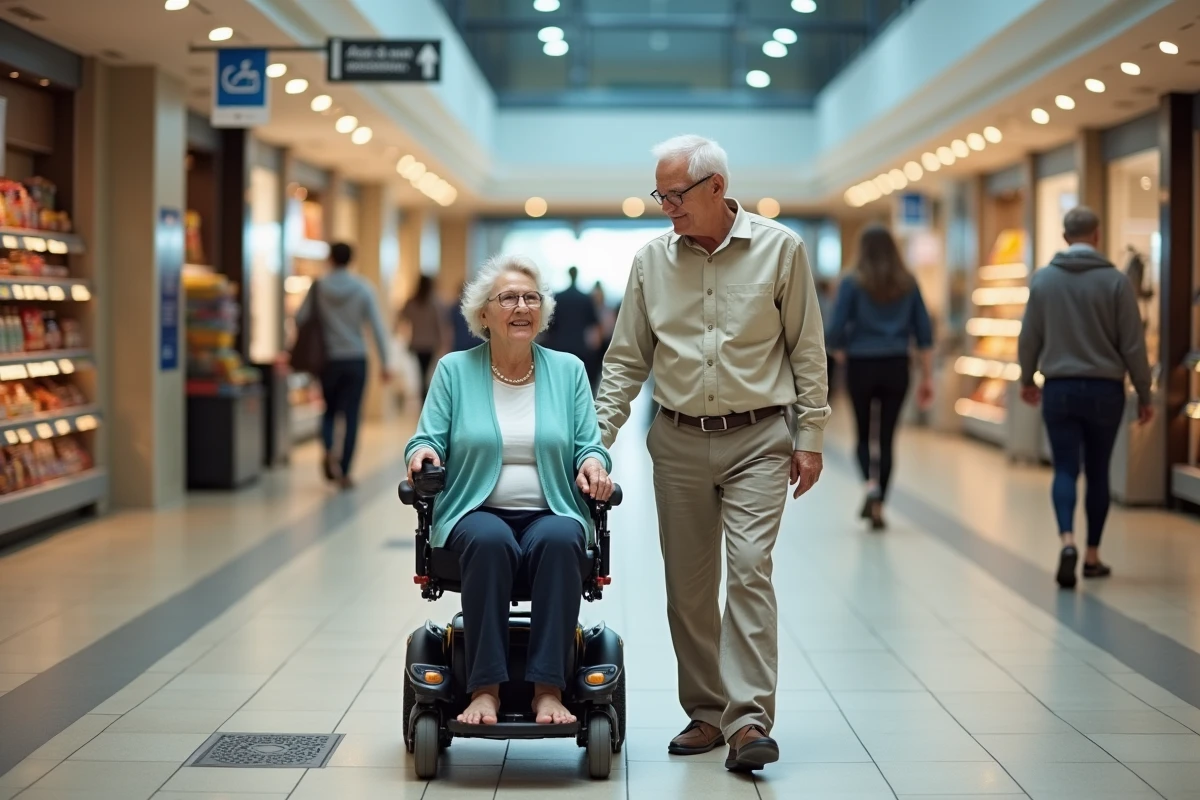
Limiting PMR access to construction issues ignores an increasingly significant part of the challenges. Reduced mobility affects the entire daily journey: public transport, leisure spaces, online services.
In the leisure sector, the Handiplage label illustrates a sectoral approach that goes beyond the strict regulatory minimum. For transport, field feedback (notably from Canada, documented by travelers) shows that the quality of PMR access varies greatly from one city to another, even within the same country.
The digital aspect is gaining importance. Recent prefectural action plans incorporate the accessibility of online services as a distinct axis. An administrative form inaccessible to screen readers creates an obstacle as concrete as a step in front of a business.
- Transport: raised platforms, audible and visual announcements, access ramps to vehicles
- Leisure: adapted pathways, specific equipment (bathing aids, sound guidance), trained personnel
- Digital: websites compliant with RGAA, forms compatible with assistive technologies, accessible downloadable documents
PMR access is not limited to a ramp or an elevator. It refers to a continuous chain of physical, organizational, and digital arrangements. Regulatory texts set a framework, labels and technical references clarify it, and territorial policies attempt to make it coherent at the territorial level. The gap between these three levels remains the main barrier to effective accessibility for all.