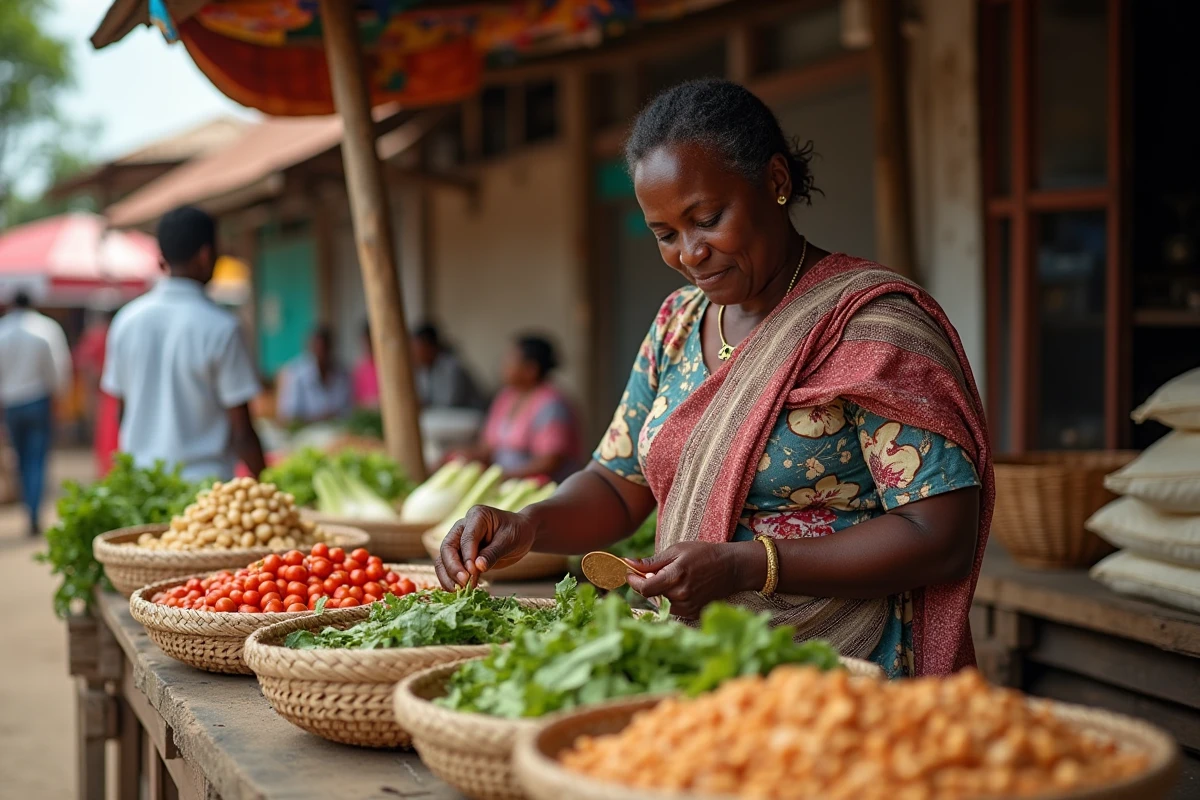
In Madagascar, pork consumption faces a system of food prohibitions structured around the concept of fady, whose scope far exceeds the religious framework often invoked by superficial analyses. Understanding why this meat remains marginal in the Malagasy diet requires an intersection of cultural, health, and economic constraints that mutually reinforce each other.
Fady and lineage prohibitions: the mechanism that locks pork consumption in Madagascar
The fady is not a simple taboo. It is a prescription transmitted by ancestors (razana) to a lineage, clan, or village, prohibiting a specific food, gesture, or behavior. Transgressing a fady exposes, in Malagasy cosmology, the individual and their family to spiritual sanctions.
Pork is among the foods most frequently subject to fady, but not uniformly. Some ethnic groups in the central highlands consume pork without restriction. Others, particularly in the south and west of the island, completely exclude it from their diet.
Each fady is local and lineage-based, never national. There is no single Malagasy prohibition on pork, but a mosaic of prescriptions that vary from village to village, from family to family. This granularity complicates any attempt at generalization and explains why analyses that reduce the issue to the influence of Islam miss the point.
We observe that the identity dimension of fady makes it particularly resistant to change. The prohibition on pork does not rest on taste aversion or a written doctrine: it functions as a marker of group belonging. Renouncing the fady symbolically breaks ties with the ancestors. In analyzing eating habits in Madagascar, this lineage dimension appears as the structuring factor.

Price positioning of pork against imported chicken and fish
The fady does not explain everything. In urban areas, including among populations not subject to the prohibition, pork remains an occasional meat. The reason is economic.
Quality-controlled pork is significantly more expensive than imported frozen chicken or basic fish available in markets. For a Malagasy household with a constrained food budget, the choice logically falls on the cheapest protein. Rice, which constitutes the almost exclusive base of the meal (vary), already absorbs a considerable portion of expenses.
- Imported frozen chicken offers a more favorable price/protein ratio than local fresh pork, making it accessible even to modest households.
- Fish (fresh, dried, or smoked) remains the primary source of animal protein in coastal regions, at a significantly lower cost than pork.
- Zebu, despite a high price, enjoys a cultural status that justifies purchases during ceremonies, while pork lacks this symbolic leverage to offset its cost.
This unfavorable price competition marginalizes pork in the daily food basket, regardless of any religious or cultural considerations.
African swine fever and health control: structural barriers to the Malagasy pork sector
The Malagasy pork sector operates in a fragile health environment. African swine fever (ASF) poses a recurring threat that periodically disrupts production and distribution.
Since the early 2020s, Malagasy health authorities have strengthened regulations and veterinary controls on slaughtering and meat markets. These measures have led to the temporary closure of certain markets and informal slaughterhouses, temporarily reducing the available supply in already under-supplied areas.
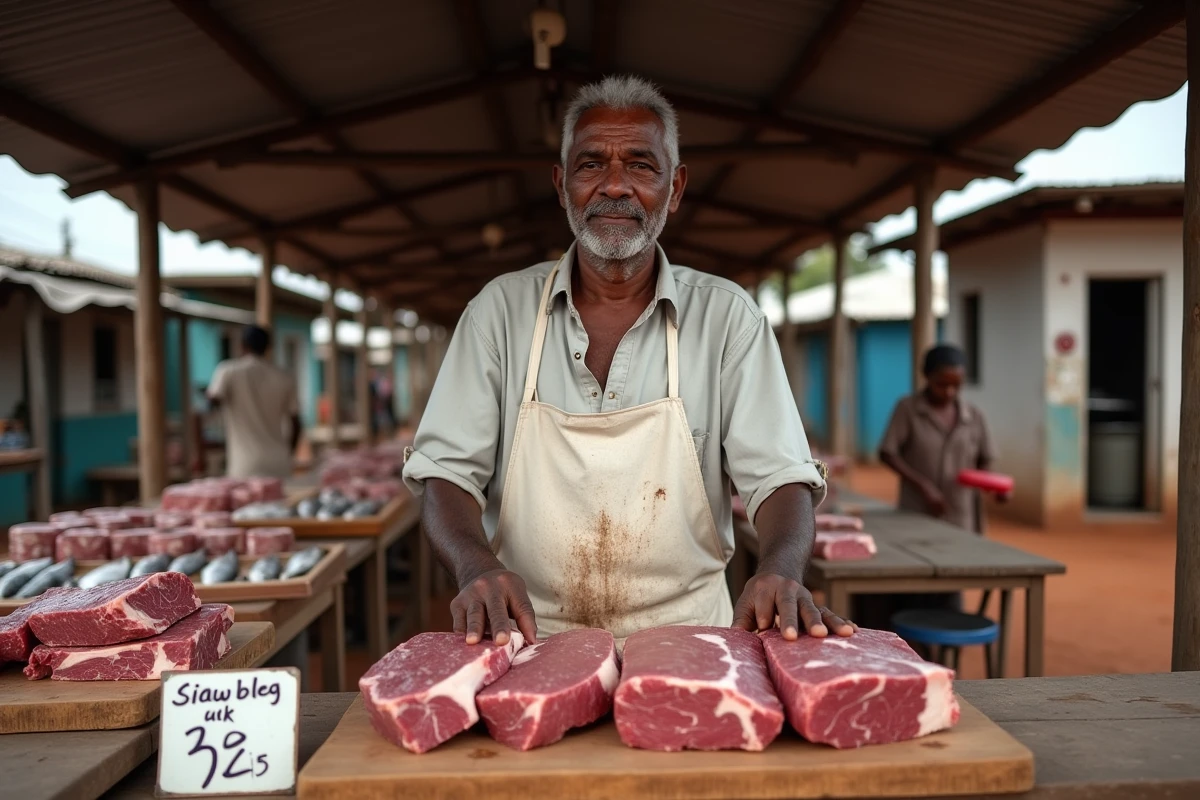
The informal circuit remains dominant. A significant portion of the pork consumed in Madagascar passes through uncontrolled slaughtering, without systematic veterinary inspection. This situation fosters legitimate health mistrust among informed urban consumers, who prefer to turn to other proteins.
Modernization of off-ground farms
Since the mid-2010s, off-ground pig farms have been developing with stricter biosecurity practices. These farms primarily target urban markets in Antananarivo and major cities, where demand exists among consumers not subject to fady.
Modernization remains geographically concentrated and affects only a fraction of national production. The majority of Malagasy pig farming remains extensive, family-run, and vulnerable to epizootics.
Influence of Islam and Christianity on meat consumption in Madagascar
Islam formally prohibits the consumption of pork, and Malagasy Muslim communities (concentrated in the northwest and on the west coast) strictly adhere to this prescription. Islamic influence thus locally reinforces pre-existing fady on pork, creating a convergence between religious and lineage prohibitions.
Christianity, which is predominant in Madagascar, does not prohibit pork. However, conversion to Christianity has not erased the fady. We observe a sustainable coexistence between Christian practice and respect for ancestral prohibitions, even among families practicing for several generations. The fady takes precedence over religious doctrine in the food sphere.
This overlap of prohibitions of different natures (cosmological, religious, health, economic) produces a cumulative effect. No single factor is sufficient to explain the low consumption of pork, but their combination effectively locks the market.
Prospects for the Malagasy pork sector
The rapid urbanization of Madagascar is gradually changing eating behaviors. In large cities, the link with the home village and ancestral fady is loosening among younger generations. Demand for pork is increasing in certain neighborhoods of Antananarivo, driven by street food and small eateries (hotely).
Ensuring health security in the sector remains the main lever. Without a network of controlled slaughterhouses and reliable veterinary oversight, urban consumer trust will remain fragile. Off-ground farms investing in biosecurity are positioning themselves in a growing market segment, but their ability to lower prices to the level of imported chicken remains uncertain.
Pork in Madagascar is not rejected by a homogeneous population: it is excluded by some groups, too expensive for others, and healthily suspect for the last. Each barrier calls for a different response, and no promotional policy will work without considering this triple segmentation.