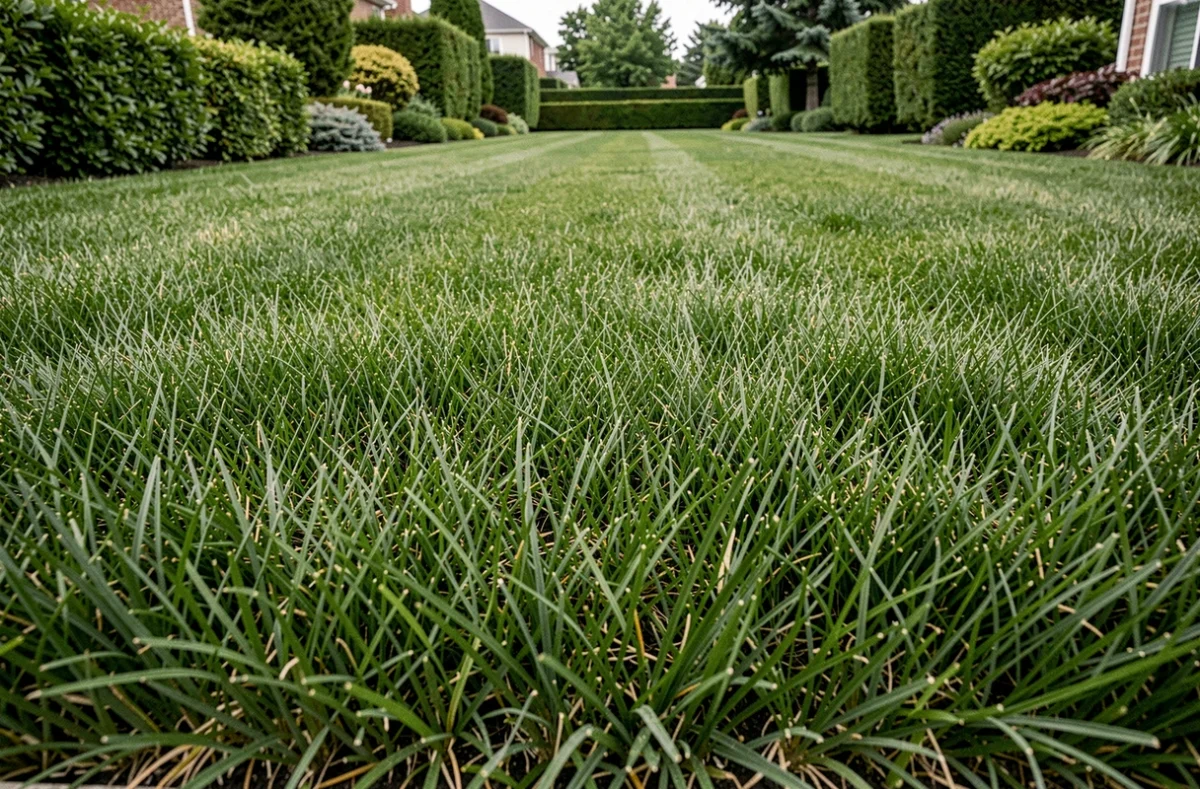
The term C4 refers to a photosynthetic mechanism in which the plant fixes CO2 by producing a four-carbon atom molecule, compared to three for traditional grasses (ryegrass, fescue, bluegrass). This additional carbon, stored in leaf cells, allows the plant to continue photosynthesis even when the stomata close due to heat.
The hybrid C4 grass combines this physiology with advanced varietal selection to improve density, color, or cold tolerance.
C4 Photosynthesis and Winter Dormancy: The Compromise to Understand
A C4 grass reaches its optimal growth between 25 and 38 °C. At these temperatures, a C3 grass slows down, turns yellow, and becomes vulnerable to summer fungal diseases. The C4 grass continues to produce sugars and thickens.
The downside of this functioning is dormancy. When temperatures drop below a certain autumn threshold, the plant goes dormant and loses its green color. In the northern half of France, this dormancy can last several months, leaving a straw-colored lawn throughout the winter.
To circumvent this limitation, researchers from Oklahoma and Mississippi are testing the bluemuda system, which combines a C4 bermudagrass with a C3 Kentucky bluegrass. The goal: to maintain green coverage year-round in so-called transition areas, where neither pure C3 nor pure C4 performs satisfactorily over twelve months. The trials also aim to reduce irrigation needs compared to a bluegrass alone.
To learn everything about hybrid C4 grass, it is important to keep in mind that the term “hybrid” encompasses both inter-species mixtures and cultivars resulting from crosses within the same C4 species.
C4 Cultivar: Why Variety Matters as Much as Metabolism
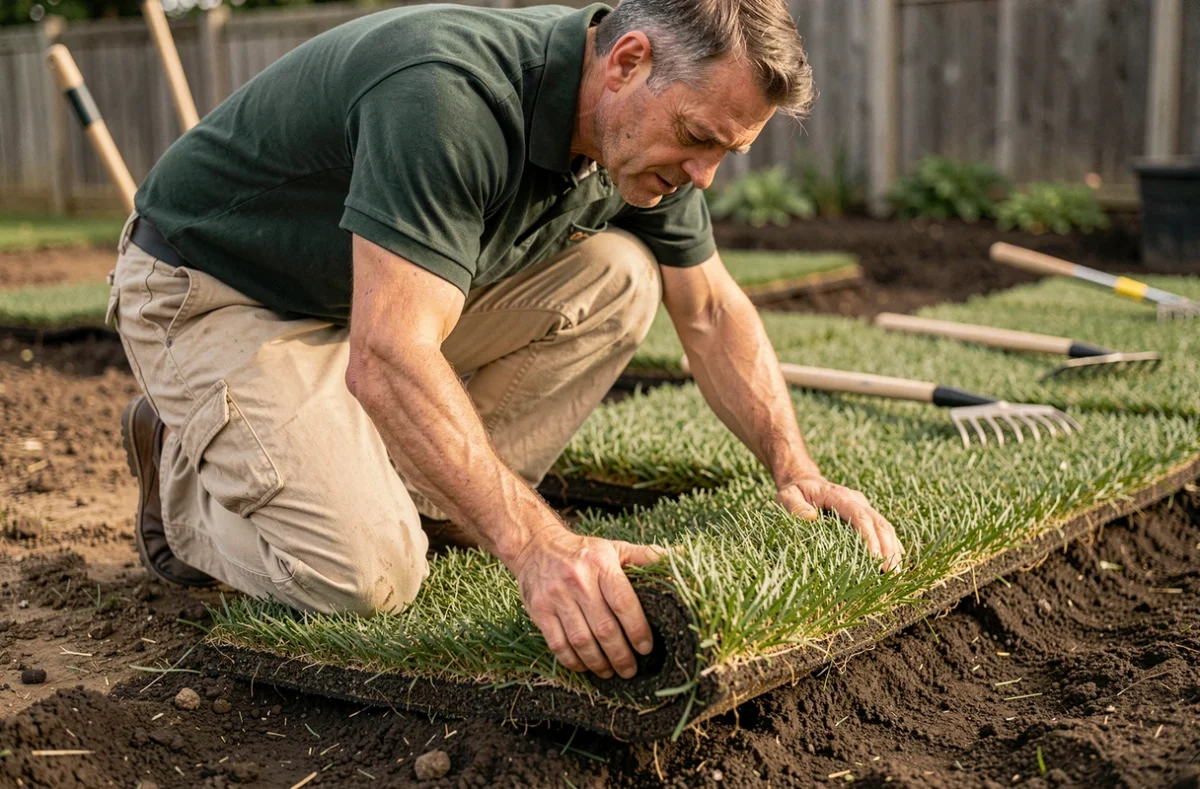
Choosing a C4 grass is not enough. The actual performance depends on the selected cultivar. The University of California, Riverside has introduced Coachella Bermuda, a hybrid bermudagrass selected for increased drought tolerance and shorter winter dormancy. This cultivar was licensed in 2025.
This selection illustrates a often overlooked point: two bermudagrasses can exhibit very different behaviors in response to cold, soil salinity, or mowing height. The selection criteria go far beyond the simple “C4” label.
Criteria for Comparing C4 Cultivars
- Estimated winter dormancy duration in your climate zone, as it determines the number of months of green lawn
- Propagation method (stolons, rhizomes, seeding) which determines coverage speed and repair capacity after wear
- Tolerance to close mowing, varying depending on whether the lawn is ornamental or intended for heavy foot traffic
An improved Cynodon dactylon will not behave like a Zoysia in partial shade. The choice of cultivar is as crucial to success as the choice of C4 type itself.
Real Water Savings: C4 Grass and Irrigation Infrastructure
The main promise of C4 grass, reduced irrigation, deserves to be nuanced. An established C4 grass consumes less water than ryegrass in the height of summer. Its deeper roots capture moisture that C3 grasses do not reach.
The irrigation infrastructure plays at least as crucial a role. At the Jean-Bouin stadium in Paris, an AquaFlow sub-irrigation system delivers water directly to the root zone, coupled with moisture sensors and a rainwater harvesting system. After one season of use, the manager reported a significant decrease in water consumption.
This professional example shows that replacing a C3 grass with a C4 without revising the irrigation method only yields part of the expected result. Traditional surface irrigation, even on C4 grass, wastes water through evaporation. The combination of a deep-rooted grass and buried irrigation increases savings.
Establishing Hybrid C4 Grass in Temperate Climate
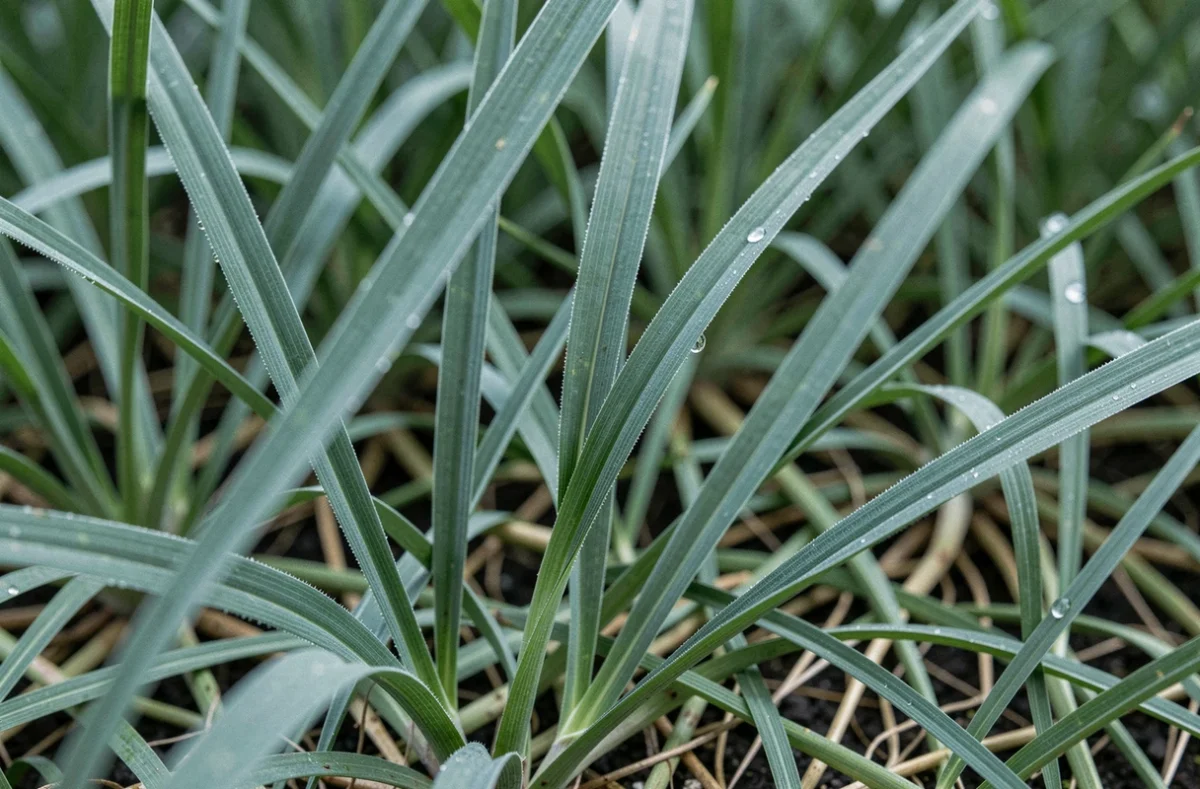
The seeding or sodding window for C4 grass is narrower than that for C3 grass. Germination requires a high soil temperature, limiting planting to the months of May to July in the southern half of France.
Soil Preparation Before Establishment
The soil must be worked to a sufficient depth to accommodate a root system that will grow much deeper than ryegrass. Compacted or unamended clay soil will hinder root progression and negate the water advantage of C4.
- Loosen the soil deeply, then incorporate coarse sand if drainage is insufficient
- Check the pH: most Cynodon and Zoysia prefer slightly acidic to neutral soil
- Avoid any seeding as long as the soil temperature remains below the germination threshold of the chosen species
A C4 grass poorly established in cold soil will not catch up, as competition from faster-growing C3 weeds in spring will smother young seedlings.
Maintenance in the First Year
During the establishment phase, watering remains regular, even for a grass known for its drought tolerance. The plant must first develop its network of stolons or rhizomes before it can exploit water deeply. The reduction in watering only becomes effective once full coverage is established, often during the second season.
The initial mowing height should be kept slightly higher than the final target height. Gradually lowering over successive mowings encourages dense tillering rather than vertical stretching.
Hybrid C4 grass addresses a real climatic constraint, but its success relies on three technical decisions made in advance: the cultivar suited to the geographical area, deep soil preparation, and the irrigation system that will support the lawn once mature. Neglecting any of these three parameters reduces the advantage of C4 metabolism to a theoretical argument.