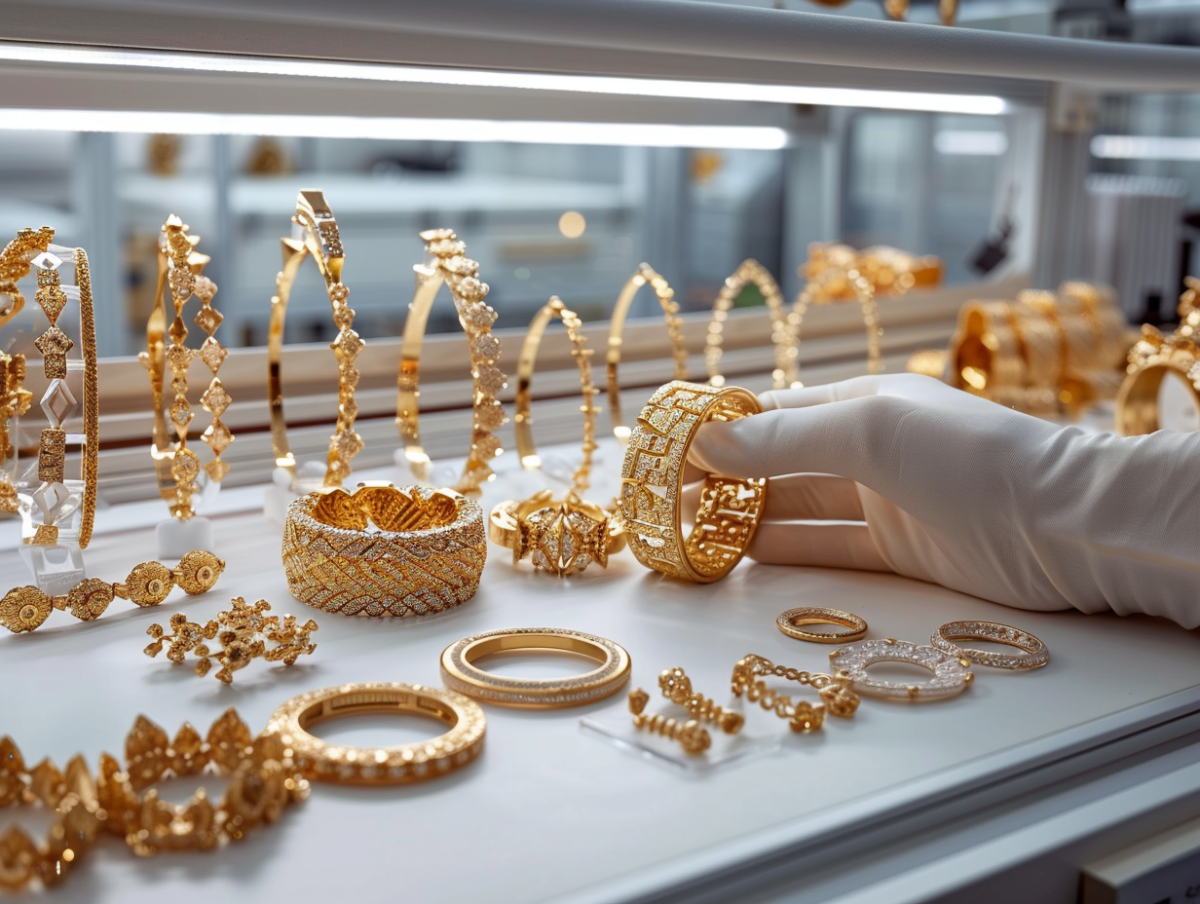
Selling gold jewelry to a foundry can often lead to some disillusionment regarding the value recovered compared to their purchase price. This depreciation can be explained by several factors. Foundries melt down gold to recover the precious metal, which means that the labor and craftsmanship of the jewelry are lost in the process. They must deduct their operational costs and make a profit, thereby reducing the offer made to the seller. The purity of the gold, often less than the standard of 24 karats, also affects the final price. Understanding these elements can adjust expectations and clarify the transaction.
Factors Influencing the Buyback Value of Gold
The gold market, volatile and subject to global economic fluctuations, plays a predominant role in determining the buyback value of gold jewelry. France, like Europe in general, is not exempt from this reality: the gold price, this official price that fluctuates constantly, is the compass guiding any investment in gold. Gold jewelry, when sold to a foundry, is evaluated based on this price, which is influenced by economic crises, industrial demand, and the monetary policies of states.
The purity and quality of gold are determining criteria. Indeed, gold jewelry often consists of alloys, thus diluting their fine gold content by the addition of other metals. This has a direct impact on value: an 18-carat gold piece contains less pure gold than a 24-carat investment bar, considered the highest quality available on the market. Foundry gold, resulting from the transformation of these pieces, has a lower intrinsic value compared to investment bars that rely on the highest quality gold.
To understand the value of your gold jewelry with the fluctuation of the official gold price, take into account the weight of the pure gold contained in your pieces after deducting the alloys. Converting foundry gold jewelry into investment bars can incur additional costs due to the transformation. During economic crises, investment in gold is often seen as a safe haven, which can raise the gold price and potentially the buyback value of your assets; however, this increase does not always compensate for the loss incurred by melting down the original jewelry.
Understanding the Melting Process and Its Impact on Price
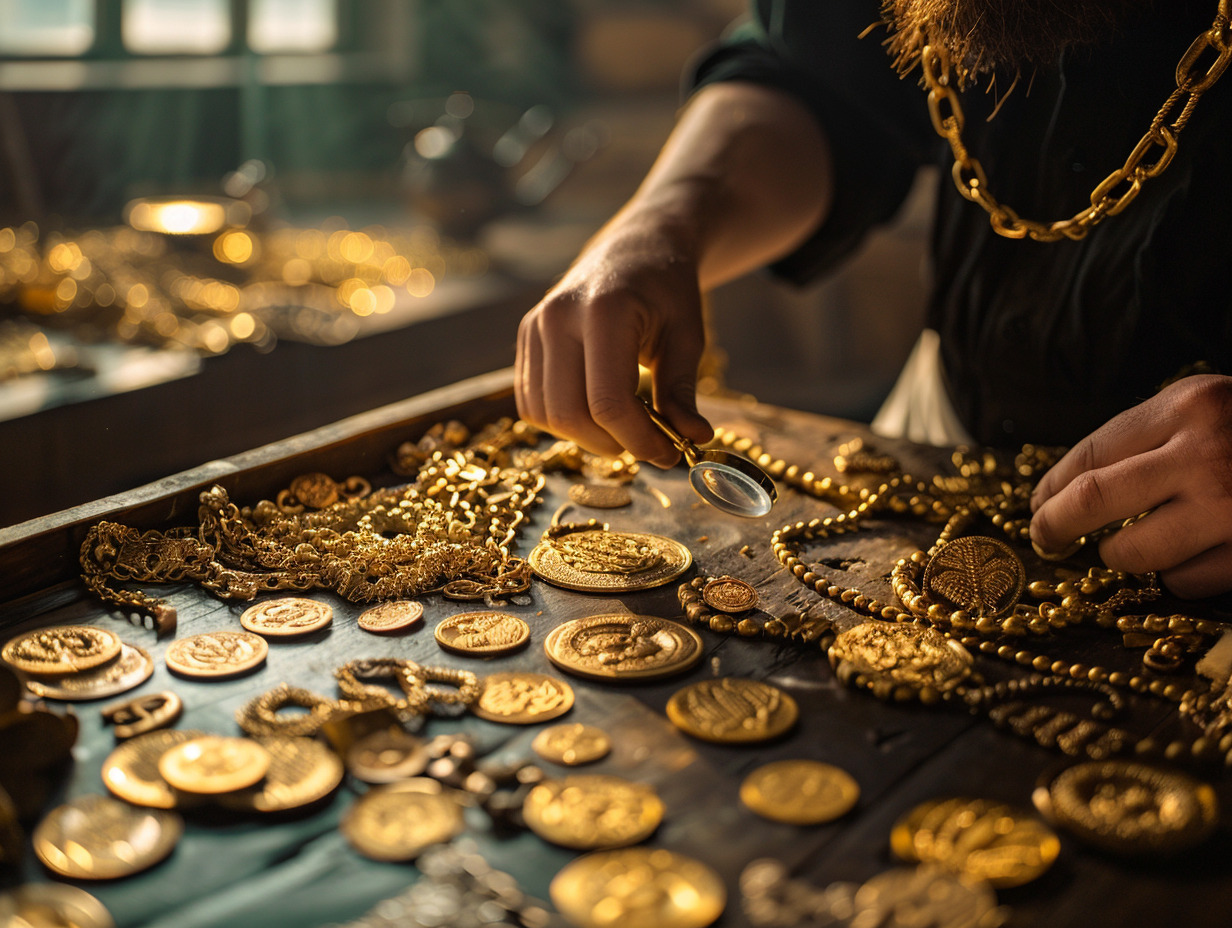
The melting process is a fundamental step in the life cycle of gold. Gold jewelry, often made of alloys to provide strength and color, loses part of its intrinsic value when transformed into foundry gold. This operation involves separating gold from other constituent metals, a process that incurs significant costs and a certain degree of loss in raw material.
The impact on price is manifold. Once the jewelry is melted, the gold obtained is purified to reach an acceptable quality level for the manufacturing of new products, including investment bars. This level of purity, often lower than that of fine gold, directly influences the final price offered by the foundry for the purchase of these transformed pieces.
In this context, foundries take into account the applicable VAT and the purity standards established by international organizations such as the London Bullion Market Association (LBMA). These criteria determine the value of foundry gold in the market and, consequently, the amount that will be paid to the seller. It follows that selling gold jewelry to a foundry, despite the transformation into a purer product, can result in a buyback price lower than the potential value of the item in its original state.
Canada, as a nation involved in gold extraction and trade, applies its own regulations that affect the melting process. Canadian laws regarding the export and taxation of gold can significantly impact the buyback price offered to sellers of gold jewelry, who are therefore encouraged to thoroughly inform themselves before any transaction.