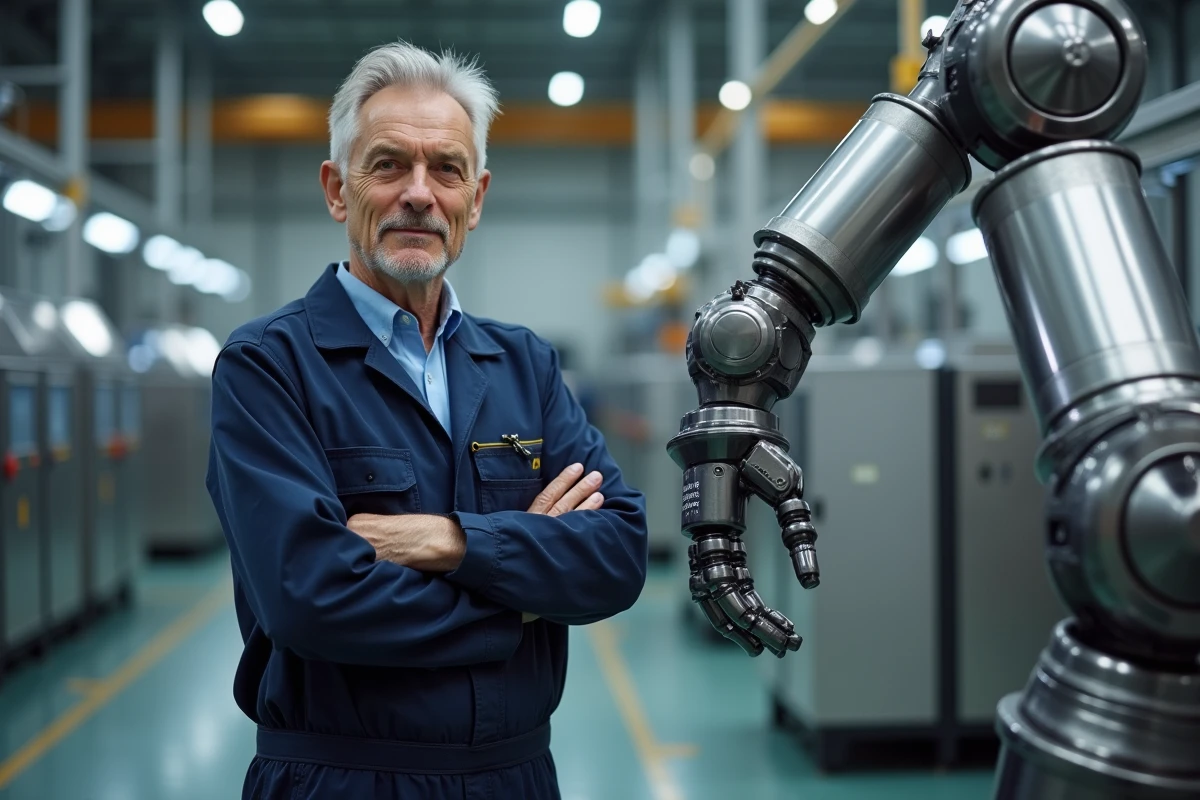
In 2023, 64% of European mechanical companies increased their R&D budget despite rising energy costs. Environmental regulations now require a 30% reduction in CO2 emissions from production lines by 2030. However, only 18% of SMEs in the sector have a structured plan to integrate artificial intelligence into their industrial processes.
Competitiveness relies on innovations that transform manufacturing cycles, alter partnerships among players, and redefine performance criteria. Emerging solutions present as many opportunities as uncertainties in a rapidly changing sector.
Where does innovation stand in the mechanical industry today?
It is impossible to ignore the momentum sweeping through the French mechanical industry: every day, innovation makes its presence felt, discreet yet decisive. This sector, a solid pillar of our economy, ranks sixth globally in terms of production. The figures speak for themselves: in 2023, revenue rises to 137 billion euros, driven by the rise of connected equipment and predictive maintenance. More than just a trend, digital transformation is becoming the backbone of innovation, from workshops to design offices.
The mechanical industries are now betting on artificial intelligence, line optimization, and the automation of repetitive tasks. Under the pressure of stringent regulations and scarcer resources, they are inventing new models. Look at the integration of composite materials into industrial machines, or the arrival of IoT sensors for continuous monitoring of equipment: the sector is no longer just keeping pace; it is taking the lead.
France, despite fierce global competition, remains the playground for many advancements in robotics and additive manufacturing. Collaboration among industrialists, startups, and research centers fuels this movement. To stay informed about these developments, specialized platforms like actumecanique.fr provide precise and constant monitoring. The landscape is shifting, the codes are changing, just like the demands for technical skills: companies are reinventing their training and recruitment methods, or risk falling behind.
Figures, trends, and challenges: what the latest industry studies reveal
It is impossible to overlook: recent data confirms the vitality of the mechanical sector in France. Despite a tense economic context, revenue reaches 137 billion euros in 2023. More than just a performance, it is proof that the mechanical sector remains the third-largest industrial employer with over 600,000 employees. The market maintains a healthy order book, but a paradox arises: production sometimes struggles to keep up, hindered by pressure on raw materials and the difficulty of finding qualified profiles.
Recent studies highlight several major trends. The transition to innovative materials is disrupting the entire supply chain. Companies are multiplying strategies to secure their supplies and diversify their partners, while the rise of smart industrial equipment boosts investment. In the job market, pressure remains high: attracting and training new talent remains a priority.
Here are some data points illustrating these dynamics:
- 137 billion euros in revenue in 2023
- Over 600,000 direct jobs
- High order books, but supply difficulties
The public debate is taking hold: how to ensure industrial sovereignty and enable everyone to upskill? Experts emphasize the need to strengthen ties between industrialists, public decision-makers, and training organizations to meet these challenges. The French mechanical sector is advancing, balancing challenges to overcome and a playground for unprecedented opportunities.

Concrete examples to boost competitiveness: when mechanical innovation changes the game
Industrial competitiveness now hinges on the ability to invest in mechanical innovation. In the face of rapid technological changes and rising demands in energy and electric vehicles, French companies are reinventing their models. Workshops are equipping themselves with connected machines, capable of adjusting production in real-time through advanced data analysis.
At the heart of this transformation, the design office creates mechanical parts using cutting-edge processes. 3D printing, high-speed machining, smart sensors: these levers optimize component quality and shorten time-to-market. A telling example: an SME from Auvergne-Rhône-Alpes developed a series of mechanical parts for a clean mobility player, reducing production costs by 18% and extending product lifespan.
Another evolution is that maintenance technicians are seeing their roles expand. They work on increasingly sophisticated industrial equipment, balancing automation and digitalization. The professions are transforming, and recruitment now targets profiles capable of supporting this shift towards more agile and intelligent processes.
Here are some examples illustrating the concrete action levers for industrialists:
- Deployment of solutions for the industry of the future
- Optimization of production equipment
- Upskilling of technical teams
Every advancement adopted in the production of mechanical equipment responds to imperatives of performance, energy efficiency, and quality. As solutions multiply, the face of the French industry is being reshaped, ready to face upcoming challenges while never ceasing to innovate.