
10 million remote medical consultations reimbursed in just a few months: this statistic is not trivial. Behind this figure, an entire landscape is shifting, with the rise of telemedicine, debates on the quality of follow-up, and a frantic race for innovation. Connected medical devices flood the market, but regulation is often lagging behind, frequently out of breath.
In large public hospitals, artificial intelligence is making its way to patients’ bedsides: pilot tests, diagnostic algorithms, everything is accelerating. Meanwhile, the shortage of caregivers is worsening in many areas. Access inequalities, digital divides, and medical desertification persist, but digital transformation is setting the pace for the sector. The daily lives of patients and professionals are changing, sometimes with no turning back.
Overview of major trends reshaping healthcare in France
The national digital health strategy was officially launched in 2019, spearheaded by the ministry. Since then, the goal has been clear: secure exchanges, streamline data sharing, and modernize care organization. Digital health, in full expansion, is disrupting doctors’ routines and reshuffling the cards for patients. Today, the reliability of diagnosis, mental health care, treatment personalization, and reducing administrative tasks are at the heart of medical priorities. Digital tools, becoming more efficient each month, have become indispensable.
The major directions set at the international level, notably by the World Health Organization, also influence French debates. Virtual consultation platforms, monitoring applications, telemedicine: these new practices promise broader access to care, but do not erase the divide between regions. Sick leave, still central to social protection, continues to weigh on mutual insurance and provident contracts. In the public sector, a reform of sick leave compensation is on the horizon, accompanied by new forms and maternity books by 2025.
The rise of data interoperability and precision medicine is changing habits: the patient is no longer just a user; they are becoming an active participant in their own journey. Caregivers are adapting, but the issue of confidentiality remains ever-present, from the medical office to secure servers. To take stock of these developments, France Médicale is multiplying analyses and insights, attentive to the expectations of professionals, patients, and institutions.
What technological innovations are shifting the medical sector?
Digital health is firmly establishing itself in the lives of the French. Connected devices, watches, bracelets, sensors, are now part of daily life. They monitor vital signs, alert on falls or heart rhythm disorders, and support people living with chronic illnesses. Health applications, sometimes prescribed by doctors, allow monitoring of blood pressure or blood sugar levels, and even provide support for smoking cessation.
Artificial intelligence has already crossed the threshold of hospitals. In image analysis (mammograms, MRIs), its effectiveness in early detection of cancers or diabetes is formidable. AI also helps choose the most suitable treatment, relying on advancements in genomics and biomarkers: medicine is adjusting to each individual’s genetic profile.
Surgical robots, like the now-famous Da Vinci robot, are revolutionizing surgery. Fewer incisions, more precision, faster recovery: in urology, gynecology, or cardiology, medical procedures are evolving. Clinical decision support systems, powered by interoperable databases, assist practitioners daily.
Here are some concrete examples of innovations that are becoming established in practices:
- Video consultations facilitated by telemedicine
- Broader access to care via virtual platforms
- Prescription of health applications, now considered true therapeutic tools
This movement towards personalized medicine, driven by the digital revolution, redefines the dialogue between patients and caregivers and profoundly modifies the care pathway in France.
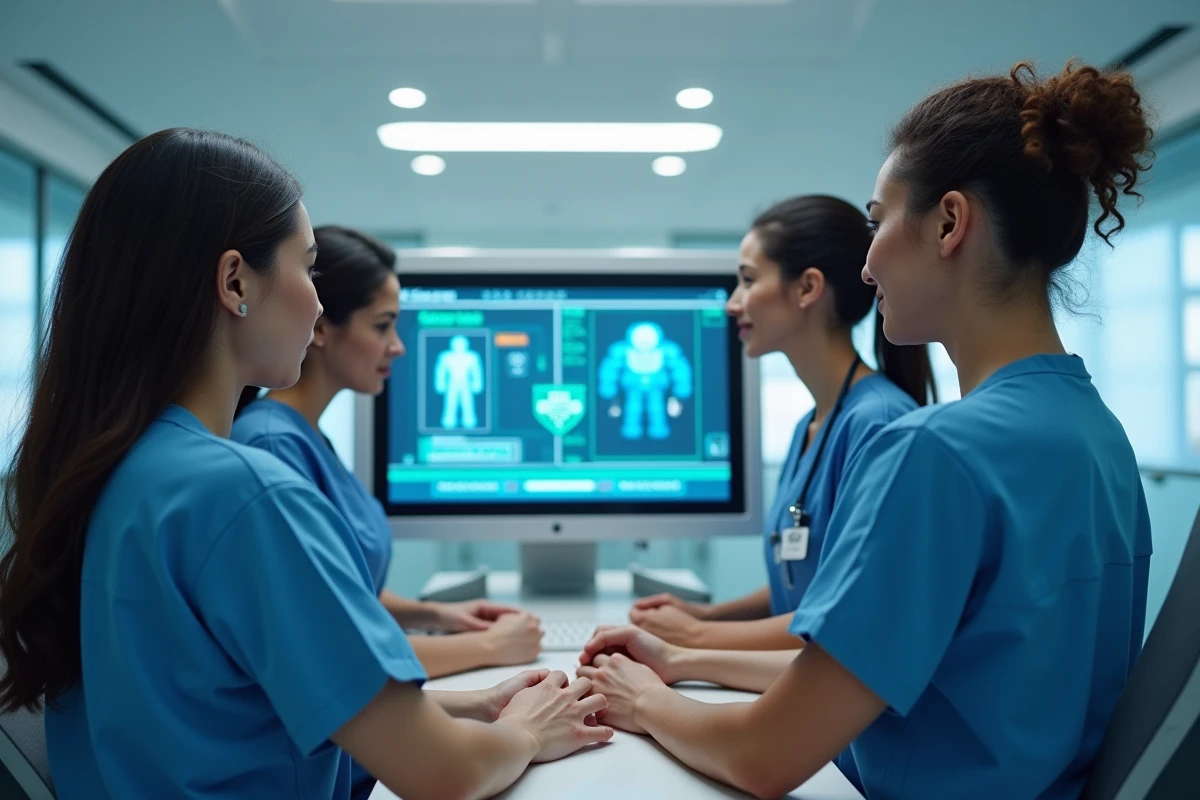
Challenges, opportunities, and perspectives: how professionals adapt to the transformations of the healthcare system
The French healthcare system is undergoing rapid transformation, driven by digital technology and the consideration of new challenges. For the past five years, the national strategy has aimed to protect data, streamline exchanges, and integrate innovation into clinical practice. Caregivers are juggling the proliferation of tools, the need for reliable diagnosis, the mental well-being of their teams, and the reduction of administrative tasks.
Health insurance providers are adjusting: teleconsultations are now reimbursed, packages for alternative medicine, coverage for comfort in private rooms, and the development of prevention programs. Despite coverage by Social Security, surgery often still means additional fees, forcing patients to supplement with mutual insurance. Professionals, for their part, must manage heavier administrative procedures, the arrival of new documents (like the maternity book planned for 2025), and increased pressure on the quality of care.
Expectations are evolving as well: equitable access, transparency on reimbursements, and out-of-pocket expenses are now top concerns. International medical journals, The Lancet Digital Health, Nature Medicine, highlight the successes of precision medicine and clinical innovations. Surveys, such as those from M3 Pulse, point to the demand for reliability, personalization, and the growing role of the patient in their own follow-up.
The major challenges in the sector can be summarized as follows:
- Strengthening cybersecurity and data protection in digital health
- Integrating mental well-being considerations at all levels of the care pathway
- Adapting health insurance guarantees to new needs and practices
In the face of these challenges, the French system is seeking the right pace: preserving care quality, encouraging innovation, and ensuring solidarity. This is no longer a simple evolution, but a profound transformation, the extent of which is measured daily in practices and expectations. The face of healthcare in France now reflects a society that wants to combine progress and humanity, without yielding to ease or haste.