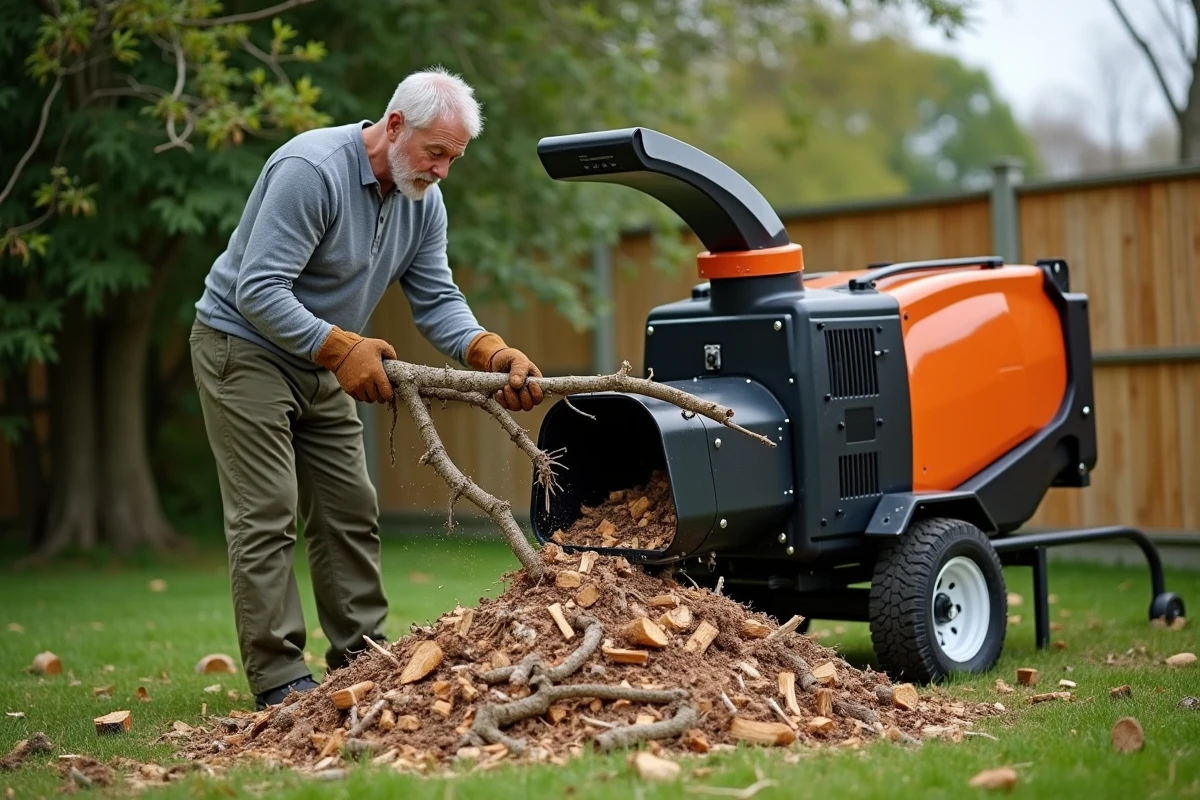
The Denqbar 5100W shredder features a technical specification that places it among the most powerful thermal models available to individuals. Generous motor, dual feed zone, fine shredding: the promises are numerous. To clarify, this article measures its real performance against concrete criteria, focusing on a point that most tests overlook: its behavior with wet vegetation, season after season.
Denqbar 5100W vs. competing thermal shredders: comparison table
Before analyzing the differences, a synthetic overview allows us to position the Denqbar among thermal shredders of comparable power available on the French market.
| Criterion | Denqbar 5100W | Mid-range thermal shredder (type 4000-4500W) |
|---|---|---|
| Type of motor | Thermal, gasoline | Thermal, gasoline |
| Announced power | Very high (high segment) | Intermediate |
| Feed zones | Two (branches and foliage) | One in most cases |
| Cutting system | Rotating blades | Rotating blades or rotor |
| Maximum cutting diameter | Among the widest in the segment | Often limited to medium branches |
| Collection bin | Absent | Present on some models |
| Risk of clogging | Low due to the dual feed | Variable depending on design |
The Denqbar stands out clearly with its dual feed zone for vegetation. This design choice separates the flow of thick branches from the flow of foliage and twigs, which reduces clogs and speeds up the overall throughput. On this point, most competing models in the same price range only offer a single hopper.
For more detailed specifications, you can consult a review of the Denqbar shredder that dissects each technical component.
The absence of a collection bin remains the main compromise. One must plan for a bag, tarp, or wheelbarrow under the outlet. This is not a deal-breaker, but a logistical point to anticipate before each shredding session.
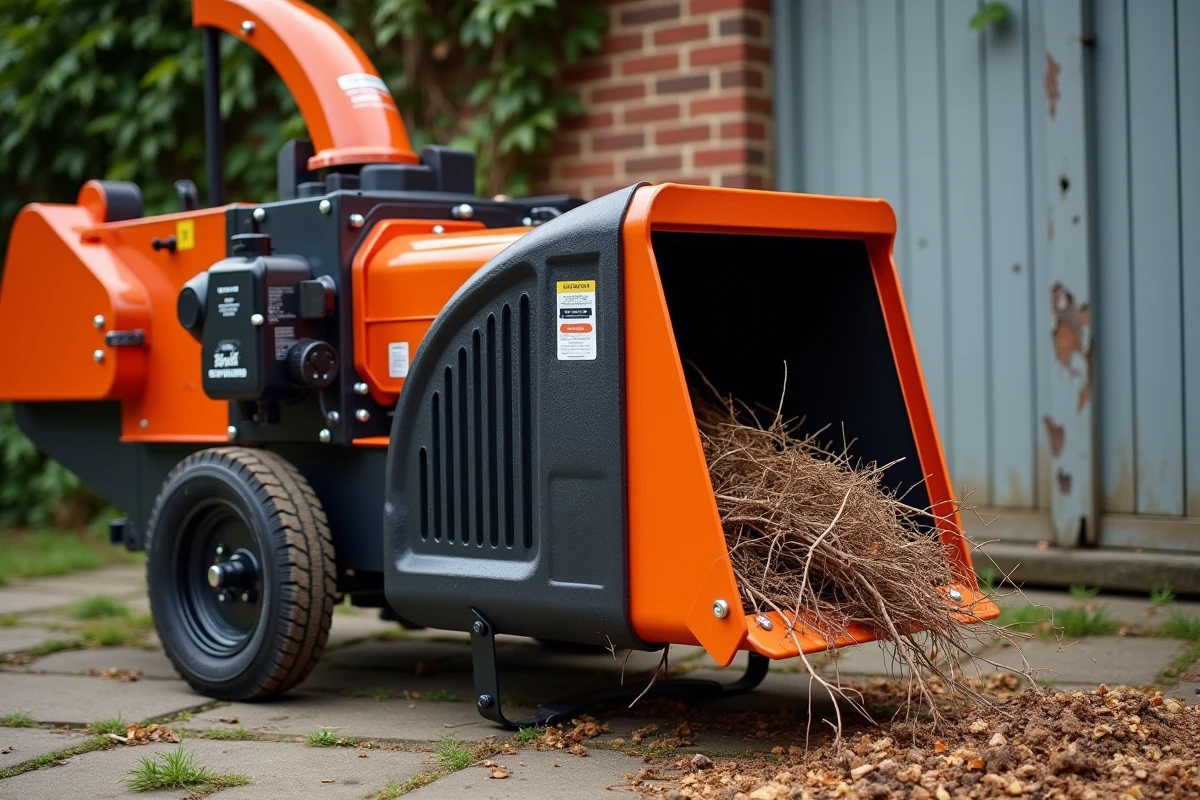
Denqbar shredder and wet vegetation: durability test in rainy climates
The majority of reviews available online evaluate the Denqbar on dry wood or freshly cut branches in mild weather. This approach overlooks a common scenario in France: shredding waterlogged vegetation after several days of rain.
What changes with humidity
A thermal shredder with rotating blades handles wet wood differently than dry wood. The sap and water weigh down the fibers, making them softer and stickier. The main risk is not a loss of motor power, but the gradual clogging of the blades and the cutting chamber.
On the Denqbar, the dual feed zone plays an unexpected role in this context. By separating wet leaves (which form compact clumps) from branches, it limits the formation of blockages in the main hopper. Users in oceanic or semi-continental climates who regularly trim laurel or privet hedges, dense and evergreen foliage plants, find a concrete advantage here.
Maintenance after wet shredding
The trade-off concerns maintenance. After each session on wet vegetation, the cutting chamber accumulates fibrous residues stuck to the walls. Allowing these residues to dry between uses creates a crust that is difficult to remove and can, over a full season, reduce the effective diameter of the chamber.
- Clean the cutting chamber immediately after each use on wet vegetation, before the residues dry
- Check the sharpness of the blades more frequently than in dry conditions, as wet fibers dull the edge faster
- Alternate if possible between wet and dry shredding sessions to limit cumulative clogging
A systematic cleaning after each wet session preserves efficiency throughout the season. Without this maintenance, performance loss becomes noticeable after the third or fourth consecutive use on wet wood.
Denqbar thermal motor: what power changes in daily use
The high power of the Denqbar is not limited to its cutting capacity on large diameters. It also changes how the device handles load variations.
An undersized thermal motor loses RPM as soon as a resistant branch enters the chamber. The speed drops, shredding slows down, and the user must feed more slowly to avoid stalling. With an oversized motor relative to the common branches of a medium-sized garden, the speed remains stable even on knotted branches. Shredding is more consistent, the mulch is more homogeneous, and overall working time decreases.
This power reserve particularly benefits occasional users. Someone who shreds once or twice a month does not develop the feeding habits of a landscaper. The surplus power compensates for rhythm errors without causing clogging.
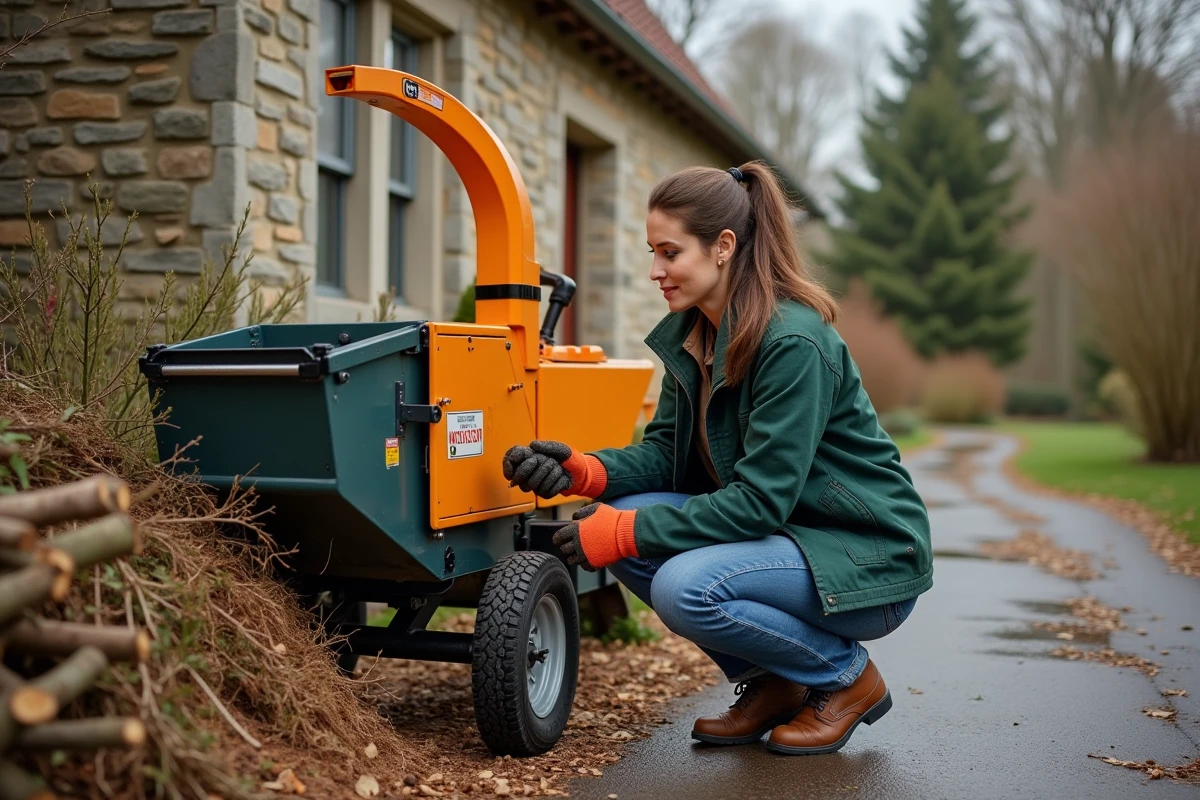
Thermal or electric shredder for a medium garden: the criteria that differentiate
The choice between thermal and electric is not limited to power. For a medium-sized garden, several factors weigh more heavily than one might think.
- Autonomy: a thermal shredder like the Denqbar operates without cable constraints or battery duration, making it suitable for areas far from a power outlet
- Noise: thermal models are significantly noisier than electric shredders, a factor to consider in densely populated residential areas
- Operating cost: fuel, oil, thermal motor maintenance versus simple electrical connection. Over several years, the cumulative cost of a thermal shredder exceeds that of an electric one
- Cutting diameter: electric shredders often cap out on thick branches, where the Denqbar accepts sections that few electric models can handle
For a garden with hedges, a few shrubs, and fruit trees producing branches of varying diameters, the Denqbar covers the entire spectrum. An electric shredder would suffice for light trimming but would require a second device or occasional trips to the recycling center for the thickest branches.
The Denqbar 5100W positions itself as a versatile device whose dual feed and power reserve make a difference in daily use. Its most concrete weakness, the absence of a bin, is easily circumvented. The real criterion for longevity, especially in humid climates, relies on the rigor of maintenance between each shredding session.