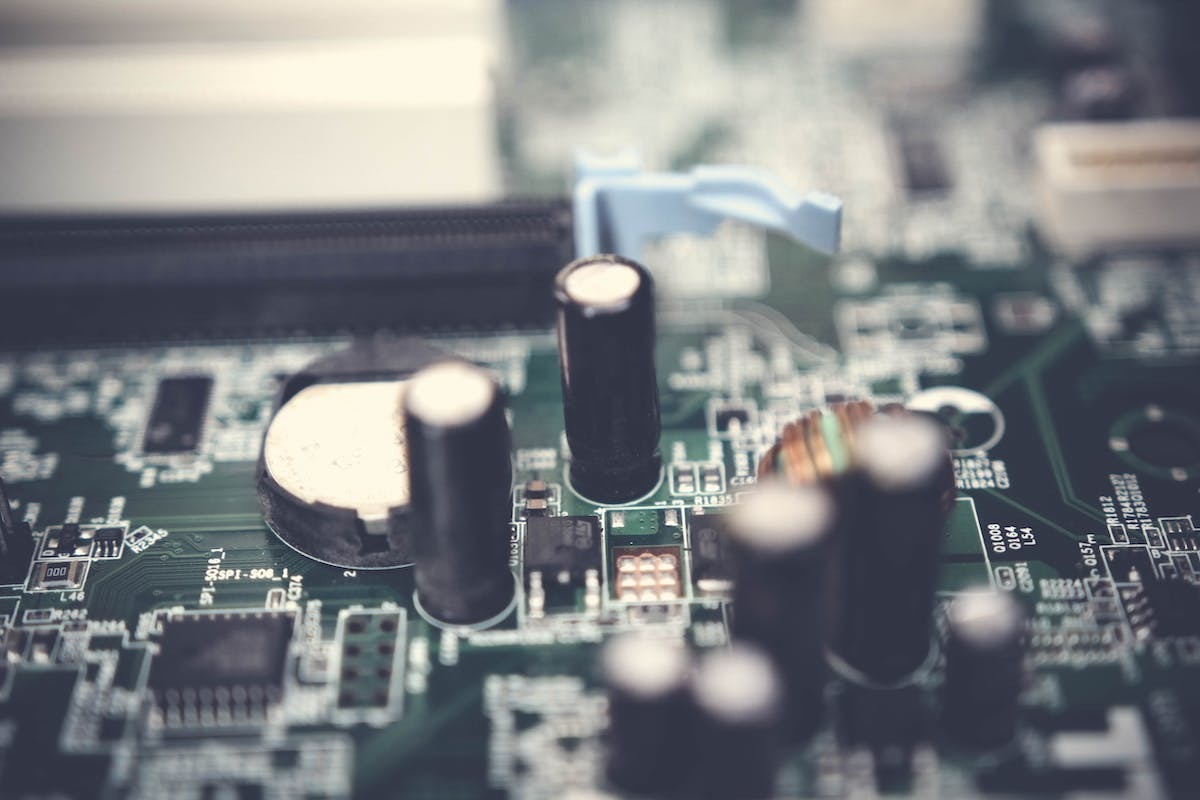
In the vast universe of electrotechnics, electrolytic capacitors prove to be of crucial importance. These components, ubiquitous in various devices such as radios, televisions, computers, and even cars, are key elements of the electrical circuit. Although their presence is undeniable, their mode of operation often remains unknown to the general public. Their role, structure, specificities, and even potential malfunctions constitute a set of essential knowledge for anyone wishing to understand the world of electricity and electronics. It is therefore time to explore these electrolytic capacitors in depth.
The Fundamentals of Electrolytic Capacitors: Everything You Need to Know
Electrolytic capacitors come in several types, each with specific characteristics. The first type is the negative polarity electrolytic capacitor. Composed of a cathode and an anode, it allows for the storage of a significant electrical charge thanks to its conductive liquid electrolyte.
The second type is the positive polarity electrolytic capacitor. It also has a cathode and an anode, but its electrolyte is solid rather than liquid. This type of capacitor offers greater stability and energy storage capacity.
Another commonly used type is the tantalum capacitor, which uses tantalum metal for its electronically active plates. This type of capacitor has advantages such as low equivalent series resistance (ESR) and good performance against voltage spikes.
Supercapacitors are advanced variants of classic electrolytic capacitors, offering much higher capacity while maintaining a fast charging time.
Types of Electrolytic Capacitors: A Practical Guide
The positive electrode: It is generally made of a sheet of aluminum that has undergone an anodic formation process to increase its surface area and improve its ability to store electrical charges.
The negative electrode or cathode: It is made up of either a metal powder, such as manganese dioxide (MnO2), or a conductive gel containing organometallic ions.
The electrolyte: This is often a chemical solution, such as diluted sulfuric acid in water or a saline solution, which ensures ionic conduction between the two electrodes.
The dielectric separating the plates of the capacitor: In the case of negative polarity capacitors, this is usually paper impregnated with conductive liquids or special synthetic polymers. For positive polarity capacitors, a solid material called insulating oxide is primarily used.
The outer casing: Generally made of aluminum or insulating plastic, it protects the capacitor from mechanical damage and also prevents any potential leakage of the electrolyte.
The Essential Components of an Electrolytic Capacitor: Decoding
Electrolytic capacitors are essential components in many electronic applications. Their high capacity, combined with their small size, makes them a popular choice for energy storage and voltage regulation.
A common use of electrolytic capacitors is found in switching power supplies, where they play a crucial role in smoothing the direct current provided by the power supply. By capturing unwanted fluctuations in current, these capacitors help maintain a stable and clean power supply for sensitive electronic circuits.
In audio amplifiers, electrolytic capacitors are used to couple different stages of the amplifier. They allow for the blocking of the direct current component while transmitting the amplified alternating signal without significant alteration. This ensures faithful sound reproduction with optimal frequency response.
Electrolytic capacitors are also widely used in lighting devices such as LED and fluorescent lamps. Thanks to their large energy storage capacity, they effectively compensate for the rapid power variations demanded by these fixtures while avoiding premature degradation related to voltage spikes.
Electrolytic Capacitors: Uses and Essential Advantages
The use of electrolytic capacitors in air conditioning and ventilation systems is also common. These components play a crucial role in the starting of electric motors, providing a high initial impulse to overcome starting resistance. They thus help extend the lifespan of equipment while ensuring smooth and efficient operation.
Electrolytic capacitors are classified into two main categories: positive polarity capacitors and negative polarity capacitors. The former are primarily used for energy storage while the latter are generally employed as decoupling or filtering capacitors.
It should be noted that electrolytic capacitors, despite their many advantages, have some limitations. Their main drawback lies in their sensitivity to temperature fluctuations. Indeed, excessive heat can lead to permanent loss or even total failure of the capacitor.
These components also have a limit known as ‘lifetime’. This means that over time, the efficiency of the capacitor gradually decreases until it needs to be replaced.
To maximize their durability, it is recommended to use capacitors with a voltage rating higher than that required by the specific application to avoid any overload or premature degradation.
Electrolytic capacitors are indispensable elements in many electronic applications. Their high capacity and small size make them an ideal choice for energy storage and voltage regulation. Despite their advantages, they require special attention regarding their operating temperature and limited lifespan. By wisely choosing these components, you can ensure reliable and optimal operation of your electronic circuits.